How JFLF Supports Welding Education
We promote the art and science of welding and educate people about career pathways in the welding field.
We do this by publishing welding books and providing welding awards and cash prizes as part of our
welding contests. JFLF’s welding awards program honors innovative and artistic student, teacher and
professional welding projects and technical papers that highlight the welding process.
Our educational materials include lesson plans, welding project kits and arc welding tutorial DVDs for
welding classes and welding projects. Whether it's creating a cool steel sculpture for a high school
shop or art class or an intricate trade-level project, we want to officially recognize the welding
process and the artistic impact it creates.
Whether you’re a student, professional or recreational welder, resources that enhance welding
education can help you develop your talents. We publish a variety of welding books on topics
ranging from the history of arc welding to frequently encountered arc welding design challenges
to standard weights and measures. We also offer an array of fun welding project kits that
include a step-by-step guide, perfect for the classroom or individual.
We offer an annual Arc Welding Project and Technical Paper Competition in various divisions: High
School, Community College, College/University, Career, Technical School and Apprenticeship and
Sculpture.
The cost to enter the welding competition is free. Winners will receive either a cash award or
welding equipment, personal recognition on our website highlighting your school and instructor
(for students) and your project or paper may be published in one of our welding books.
We will post news about our next welding contest soon. In the meantime, we encourage you to
start thinking about our welding awards and how your arc welding project could be a contender.
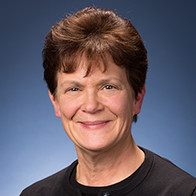
Leslie S. Brown, President
Associate Attorney Lincoln Electric Company
President, the James F. Lincoln Arc Welding Foundation
Leslie Brown is an Associate Attorney at the Lincoln Electric Company and President of the James
F. Lincoln Arc Welding Foundation.
Ms. Brown has been with the Lincoln Electric Company for 18 years. After graduating from
Cleveland Marshall College of Law in 1996 she began her career at Lincoln Electric in 1997
focusing on Product Liability and Employment Law. In 2009, she was promoted to Director of Human
Resources and served in that role until April of 2013 when she transitioned back to the Legal
Department. She was elected to the Board of the James F. Lincoln Arc Welding Foundation in 2013
and has served as its President since that time. She is also a board member of the Sturbridge
Village Condo Association, where she has served since 2002 and currently holds the office of
Secretary for that organization. She is also an active member of a Northern Ohio Local
Engagement Group coordinated through Exponent Philanthropy (formerly Association of Small
Foundations) whose purpose is to encourage conversation and collaboration between small
foundations.
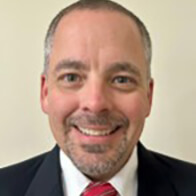
Scott Strawn, Executive Director
Director, Global Applications and Education
Executive Director, The James F. Lincoln Arc Welding Foundation
Scott is currently responsible for overseeing all of the Application Resource Center (ARC)
locations, education, segment solutions marketing, and the Welding Technology and Training
Center (WTTC) for Lincoln Electric. Hired in 1998 as an engineering trainee, he has had various
roles including automation project manager, technical sales representative, automation sales
manager in China, marketing, service, and technical director in Singapore, and now as director,
global applications and education.
Scott earned a Bachelor of Science in Mechanical Engineering from Michigan State University and
an MBA from Central Michigan University.

Lou Mendoza, International Board Member
South America Industry Segment Manager
Lou has been with the Lincoln Electric Company for 18 years. Upon graduation from Penn State
University with BS in Electrical Engineering, he joined in 1998 as a Technical Sales
Representative. After working in Technical Sales in Texas for 6 years, he was promoted to his
first International Assignment in 2004 in Mexico City as Technical Sales Manager. In 2006, he
was promoted to Regional Manager for Central America & Caribbean, Mexico Exports Manager and
Regional Marketing Responsible. In 2010 Lou was promoted to Managing Director of Lincoln
Soldaduras de Colombia, with direct P&L responsibility for Lincoln Electric’s Operations in
Colombia. With Lincoln Electric’s Industry Segment approach, he was promoted to Industry Segment
Manager for South America (except Brazil) in 2012 until present. Lou has been an active
International Board Member of the James F. Lincoln Arc Welding Foundation since 2008 and an
active member of the American Welding Society. Lou Currently is Based in Colombia, South
America.
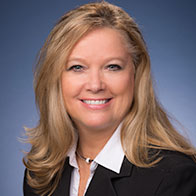
Lori J. Hurley, Secretary
Executive Assistant to Senior Vice President of Sales & Marketing
Global U.S. Sales Manager Secretary, the James F. Lincoln Arc Welding Foundation
Lori Hurley is the Executive Assistant to the Senior V.P. of Sales & Marketing - Global, U.S.
Sales Manager of the Lincoln Electric Company and Secretary to the James F. Lincoln Arc Welding
Foundation.
Ms. Hurley has been with the Lincoln Electric Company for 20 years. After graduating from Chardon
High School in 1978 she attended Lakeland Community College. She worked in banking for 16 years
before being hired at Lincoln Electric as a Purchasing Clerk in 1994. In 1997, she was promoted
to a buyer in the Automation Division where she worked for three years, and then in 2000 was
promoted to Executive Assistant to the Senior V.P. of Corporate Acquisitions, Investor
Relations, Global Marketing, Domestic Sales and still holds the position of Secretary to the JFL
Foundation.
Tony Hopper
Project Manager, AIDT State of Alabama - Mobile, AL
Matt Hayden
Welding Instructor/Department Chair, Polk County College and Career Academy - Cedartown,
GA
Martha Schreiman
Agricultural Instructor/FFA Advisor, Santa Fe R-X School District - Alma, MO
Alex Preston Byrd
Assistant Professor in Agricultural Education, Clemson University - Liberty, SC
Julio Martinez
Welding Instructor, Polaris Career Center - Middleburg Heights, OH
|
|
|